











How the LONCIN UWOLF1000’s Digital Cockpit Redefines Utility Vehicle Driving
In modern utility vehicles, performance is no longer defined only by engine power or off-road capability. As working environments become more demanding, driving quality increasingly depends on how efficiently a vehicle delivers critical information to the driver.
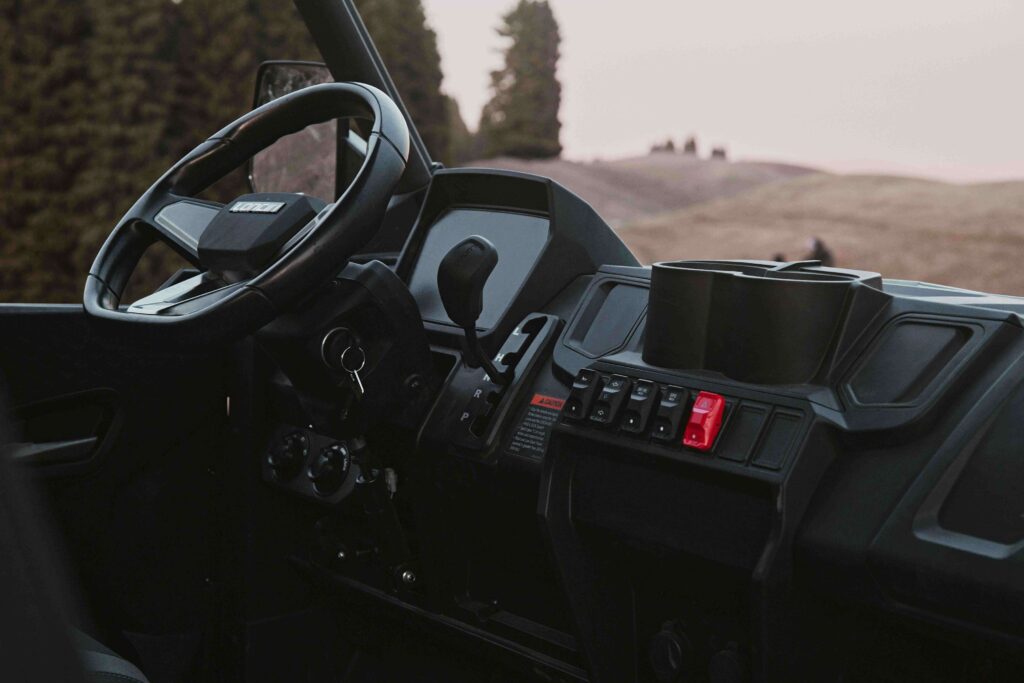
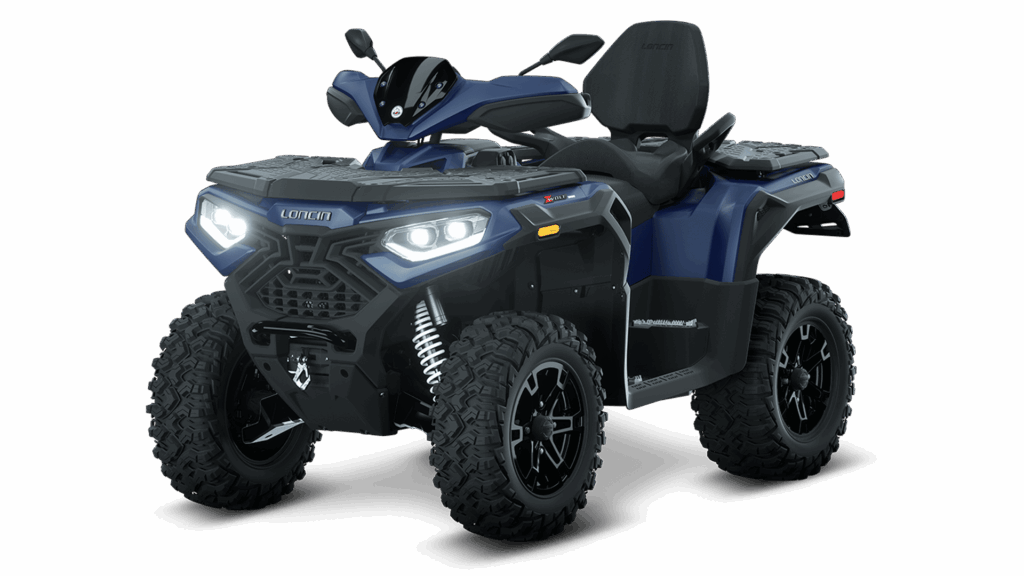
The LONCIN UWOLF1000 introduces a full-color digital cockpit designed to improve this information flow, enabling more structured, responsive, and intuitive vehicle operation.
Why Traditional UTV Instrument Panels Are Becoming a Limitation
In real-world utility applications, driver workload is not only caused by terrain difficulty but also by continuous attention switching between the road and the instrument cluster.
In environments such as forest patrol routes, construction sites, muddy terrain, or towing operations, traditional analog or basic LCD dashboards often present clear limitations:
- Poor readability under vibration
- Reduced visibility in strong sunlight or low-light conditions
- Delayed or fragmented status feedback
- Frequent need for manual information scanning
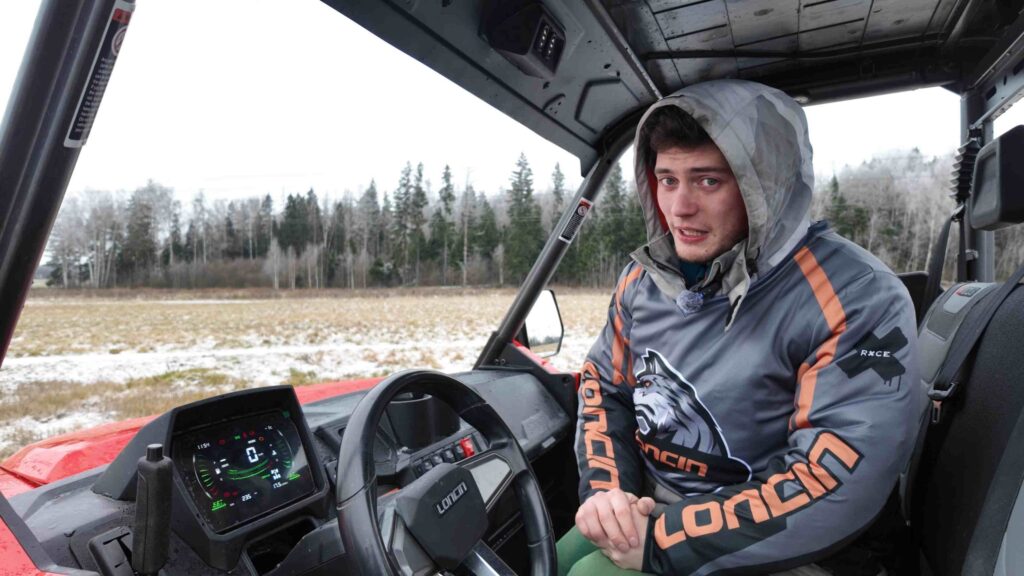
In practice, this forces drivers to repeatedly shift visual focus away from terrain observation. Over long working cycles, this increases cognitive load and reduces situational awareness.
From a human factors engineering perspective, this is closely related to increased visual attention switching, which directly impacts operational efficiency and fatigue levels.
Digital Cockpit Design in the UWOLF1000
The UWOLF1000’s digital cockpit is designed around a simple principle: reduce the time and effort required to understand vehicle status.
Instead of presenting isolated data points, the system organizes key information into a clear visual hierarchy, allowing faster interpretation in real driving conditions.
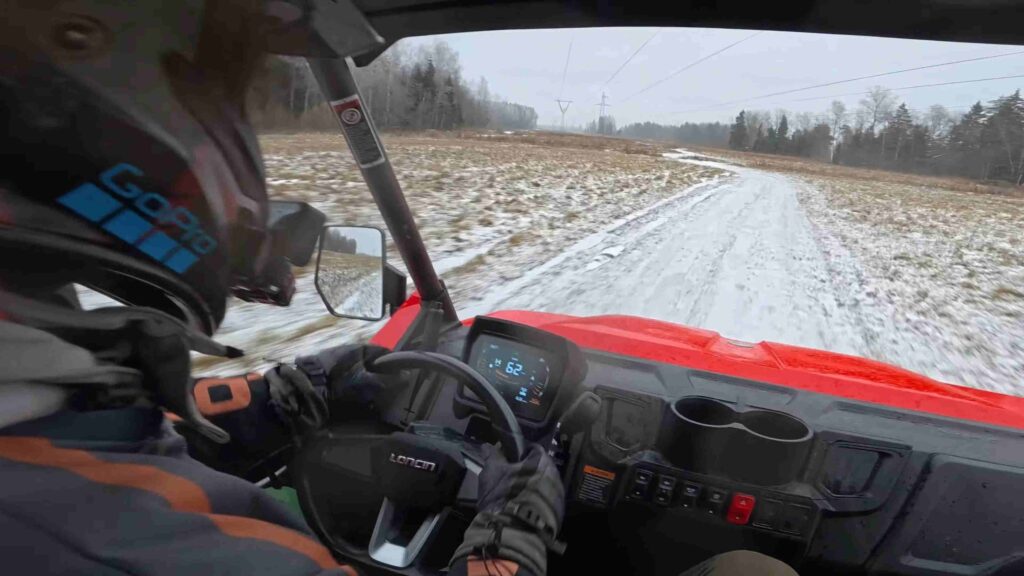
Drivers can access:
- Real-time speed and engine status
- Drive mode and drivetrain state
- EPS assist level feedback
- Fuel level and estimated range
- System warnings and diagnostics
This structured layout reduces the need for visual searching. Even in vibration-heavy environments, essential information can be understood in a quick glance.
The design aligns with common principles in human-machine interaction systems, where improved information clarity leads to faster decision-making and reduced operational strain.
How It Improves Real Driving Decisions
The benefit of a digital cockpit becomes more evident in dynamic or changing terrain conditions.
The UWOLF1000 supports multiple drive modes and electronic steering assist adjustments. The cockpit provides immediate visual confirmation of system state changes, ensuring that drivers always understand how the vehicle is configured.
For example:
When entering low-traction terrain, the driver can quickly confirm drive mode engagement
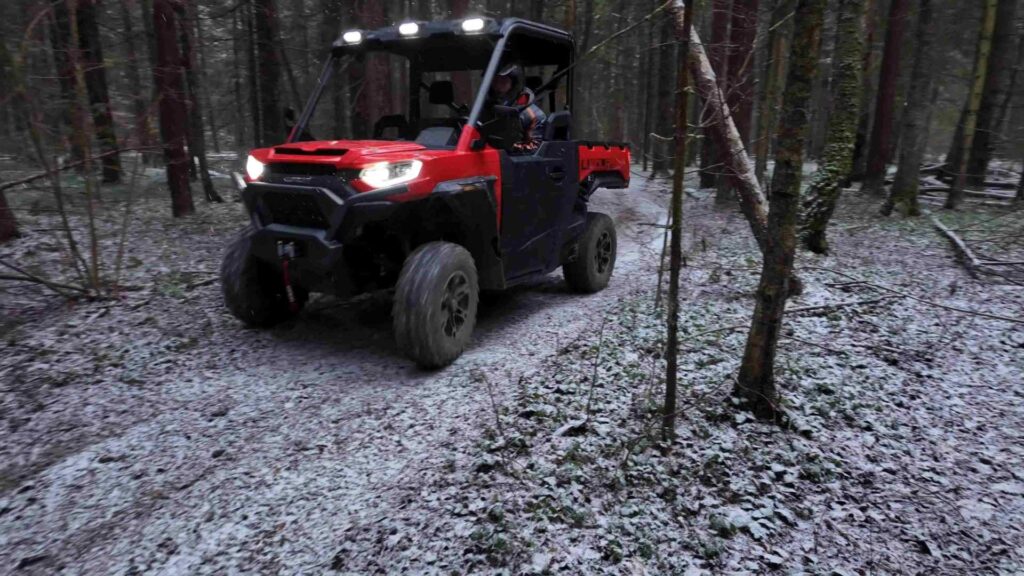
During towing operations, system feedback reflects changes in load response
In long-distance driving, alerts are clearly presented without requiring detailed inspection
This reduces reliance on experience-based assumptions and replaces them with real-time system feedback.
As a result, driving decisions become more consistent, especially in professional utility environments where reliability is critical.
Reducing Cognitive Load in Long Operation Cycles
Fatigue in utility vehicle operation is not only physical. A significant factor is continuous mental processing of fragmented information.
When drivers repeatedly verify system status while managing terrain navigation, cognitive load gradually increases. Over time, this can reduce attention stability and decision quality.
The UWOLF1000 addresses this through a more structured information flow. Instead of requiring repeated confirmation checks, the system delivers continuous, clearly organized feedback.
In extended operation scenarios, this leads to:
- Fewer unnecessary visual checks
- More stable attention on terrain conditions
- Reduced mental workload
- Improved operational efficiency during long shifts
This type of interaction design is increasingly recognized as an important factor in modern utility vehicle ergonomics.
LONCIN’s Engineering Perspective
With long-term development in powertrain systems and utility vehicle platforms, LONCIN has established a strong mechanical foundation focused on durability and performance stability.
The integration of a digital cockpit in the UWOLF1000 extends this foundation into the domain of human-machine interaction.
Across the industry, utility vehicles are gradually evolving beyond purely mechanical systems. Information clarity, system feedback speed, and interaction efficiency are becoming increasingly important in defining overall usability.
The UWOLF1000 reflects this shift by combining mechanical capability with structured digital feedback, resulting in a driving experience that is more controlled, more transparent, and better aligned with modern professional use cases.
Conclusion
The UWOLF1000’s digital cockpit is not simply a display upgrade. It represents a shift toward more efficient driver-vehicle communication in utility environments.
By improving how information is presented and interpreted, it helps reduce cognitive load, supports faster decision-making, and enhances overall operational consistency in real-world working conditions.
This makes it a relevant example of how modern UTV design is evolving toward integrated mechanical and digital systems working together as a unified driving platform.
.webp "XWolf700L 12")
.webp "XWolf550L 13")
.webp "XWolf300 14")
.jpg "XWolf200 15")
-1.webp "UWolf1000 16")
.webp "UWolf700L 17")