









In-depth analysis of ATV
ATV (All-Terrain Vehicle) is a type of off-road vehicle specifically designed for unpaved roads and challenging terrain. From farms and woodlands to mud, gravel roads, and off-road tracks, ATV can meet various needs for work, transportation, outdoor exploration, and recreational riding, depending on their configuration. Four-Wheeler, Quad, and Quad Bike are commonly used to describe four-wheeled ATV. Therefore, four-wheeled vehicles belong to the category of ATV, but the concept of ATV itself is not limited to four-wheeled models. The use of these terms also varies across different markets.
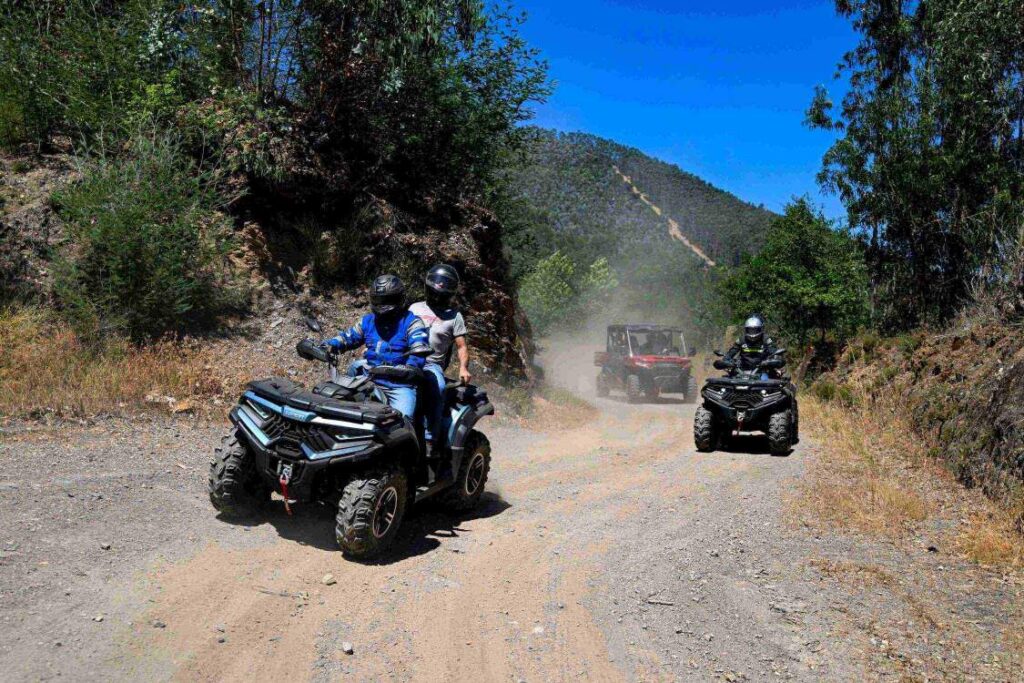
What Exactly is an ATV?
LONCIN doesn’t believe an ATV is simply “four wheels and an engine,” but rather a vehicle that needs to achieve a reasonable balance between power, drive, suspension, tires, ground clearance, frame, and handling.
Therefore, the core value of an ATV isn’t just speed or engine displacement, but rather:
providing controllable, reliable, and adaptable off-road capability in different terrains and usage scenarios.
This is why different ATV have significantly different designs.
Utility ATV used for farm work need to focus on traction, load capacity, and low-speed power; models used for muddy off-roading require higher ground clearance, strong power, and stronger traction; models used for recreational riding place greater emphasis on handling, suspension, and driving experience. Therefore, no single ATV configuration can define all ATV.
ATV vs. 4-Wheeler vs.Quad
In everyday conversation, ATV, Four-Wheeler, Quad, and Quad Bike are often used interchangeably, especially in different countries and regions where consumers’ usage habits vary.
However, from a vehicle classification perspective, their conceptual scopes are not the same.
| Term | Meaning | Relationship to ATV |
| ATV | All-Terrain Vehicle; a broad category of off-road vehicles designed for various terrains | The overall category |
| Four-Wheeler | The full form of 4-Wheeler | A type of ATV |
| Quad | Commonly refers to a four-wheeled all-terrain vehicle | Usually refers to a four-wheeled ATV |
| Quad Bike | Another common term for a quad | Usually refers to a four-wheeled ATV |
| UTV | Utility Terrain Vehicle; a separate category of off-road vehicle | A separate vehicle category |
| Side-by-Side | A common term for UTVs, referring to their side-by-side seating layout | Another term for UTV |
Therefore, “Four-Wheeler” cannot completely replace “ATV”. When discussing the entire category of all-terrain vehicles, ATV should be used; when specifically referring to four-wheeled models, it is more accurate to use Four-Wheeler, Quad, or Quad Bike.
ATV Structural Analysis
ATV typically employ a compact, open-frame design, with the rider seated in a straddle position in the center of the vehicle and controlled via handlebars. Unlike conventional cars, the key structural features of an ATV are primarily designed around off-road handling, power transmission, suspension, and terrain mobility.
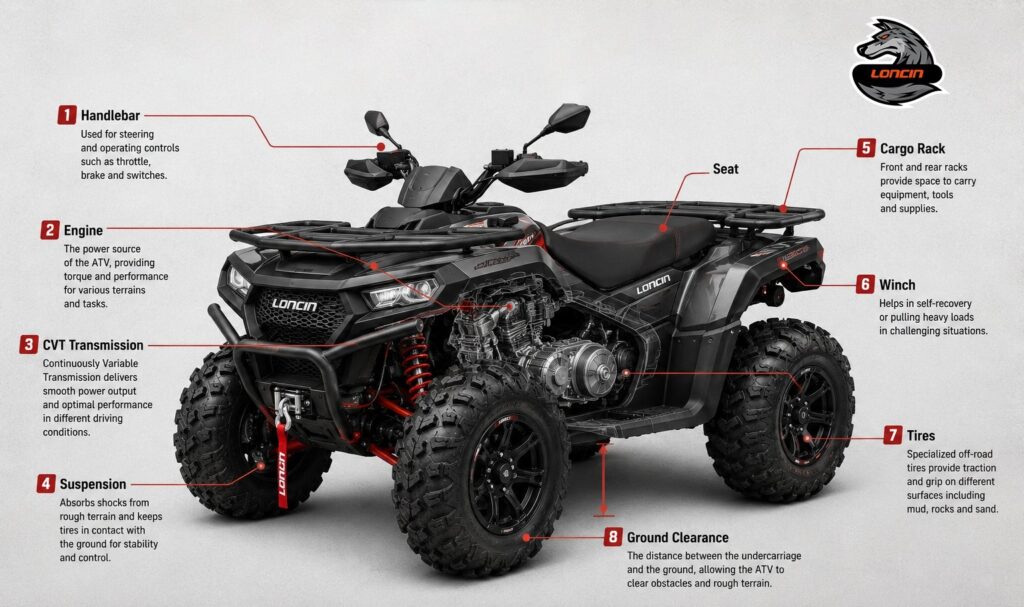
While ATV designed for different purposes may vary significantly in body size, tires, suspension, cargo rack, and powertrain, most models are comprised of the following core components.
How does an ATV Achieve “All-terrain” Capability?
An ATV “all-terrain” capability doesn’t come from a single component, but rather from the combined effect of its powertrain, drive system, suspension, tires, ground clearance, and chassis structure.
- Engine & CVT: Provides the power and torque output required for different terrains.
- 2WD / 4WD: Adjusts drive force according to road conditions, enhancing traction in mud, gravel, and slopes.
- Suspension: Absorbs shocks from rough terrain and helps the wheels maintain contact with the ground.
- Tires: Adapts to mud, gravel, and general off-road surfaces through different tread patterns and sizes.
- Ground Clearance: Reduces chassis contact with obstacles such as rocks and tree roots.
- Chassis: Achieves a balance between stability, handling, and off-road capability.
Therefore, an ATV off-road capability depends on the overall system matching, not just engine displacement. LONCIN also employs different solutions in powertrain, drive system, and chassis configuration based on different usage scenarios, making different ATV more suitable for corresponding terrains and tasks.
What are the Applications of ATVs?
The value of ATVs lies in their versatility.
Depending on the model configuration, ATVs can be used for:
Agriculture: Farm transport, inspection, and routine operations.
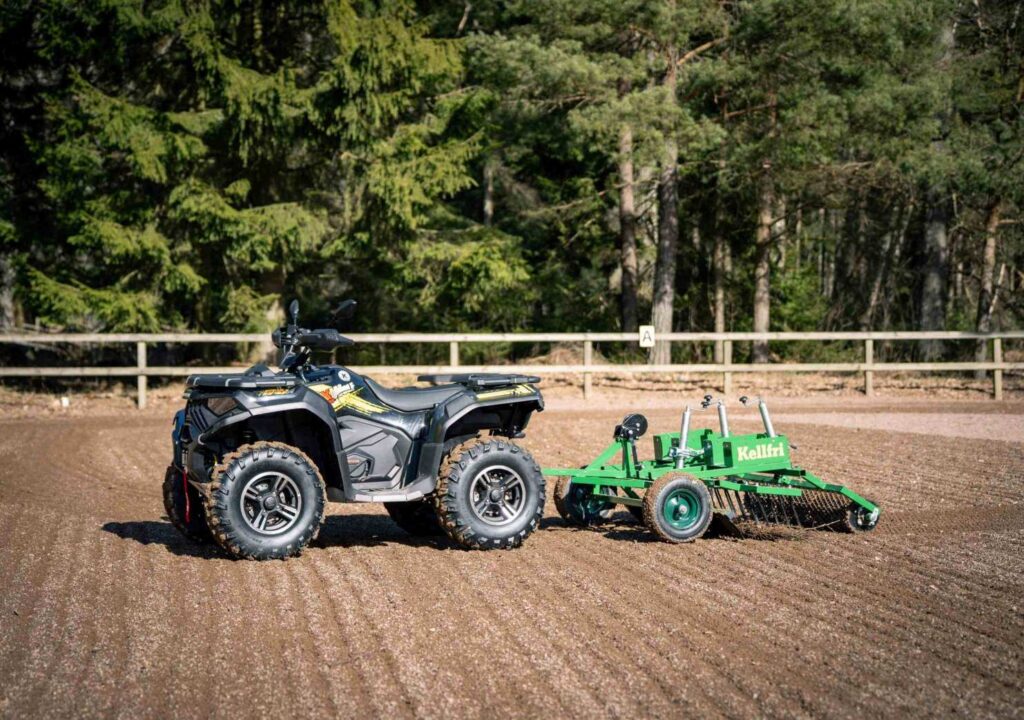
Forestry: Forest patrol, equipment transport, and land maintenance.
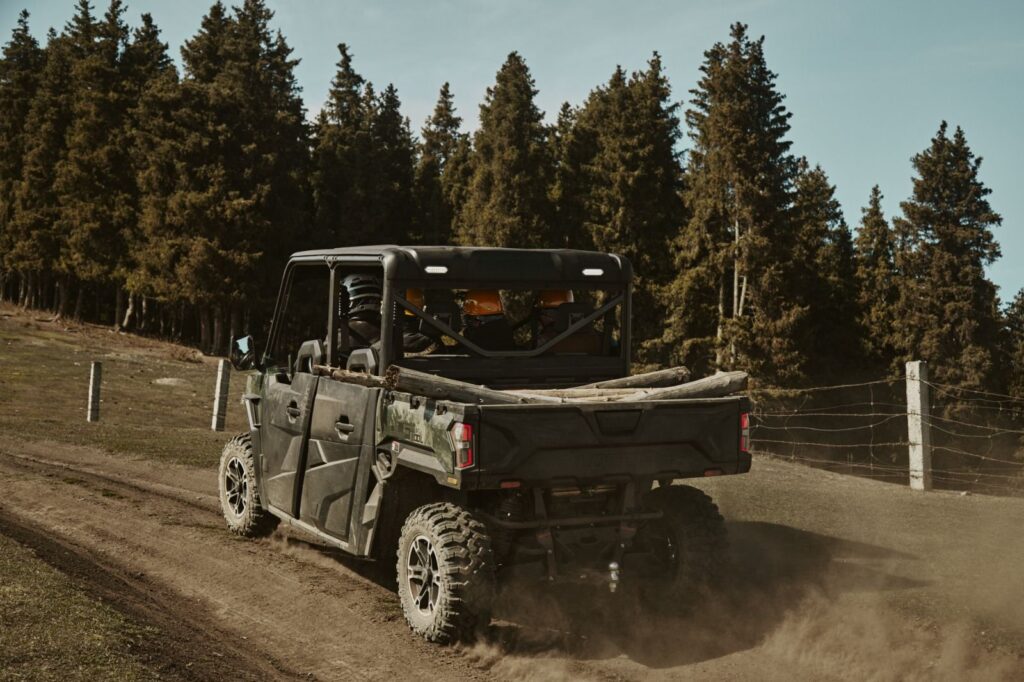
Property Management: Routine maintenance of large farms, ranches, and private land.
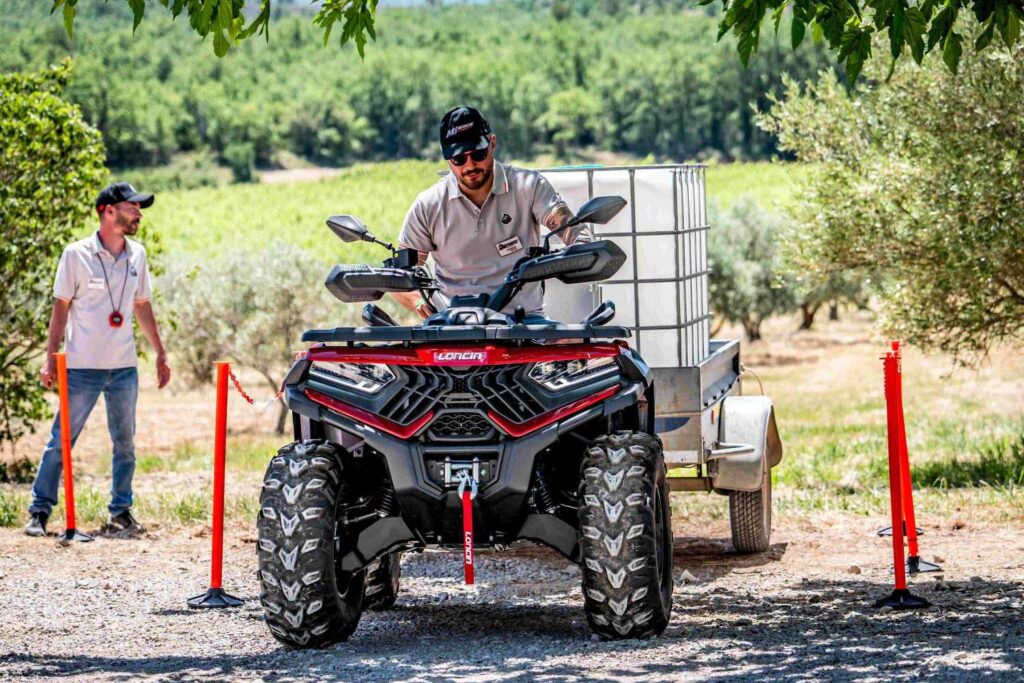
Hunting & Outdoor Activities: Equipment transport and outdoor activities in challenging terrain.
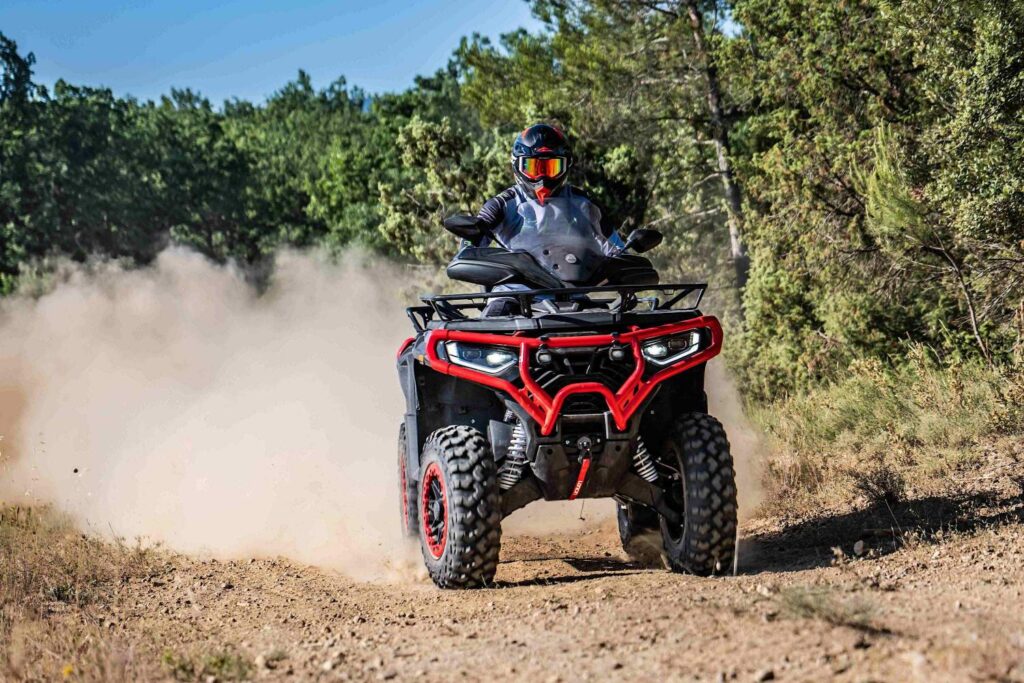
Trail Riding: Recreational riding on mountain, forest, and off-road trails.
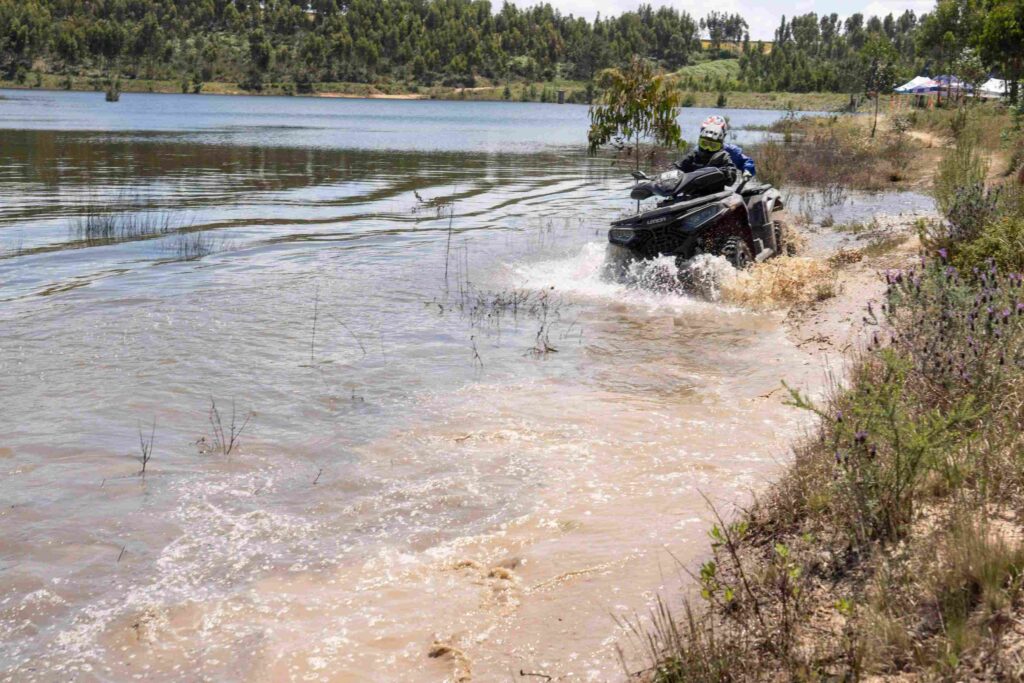
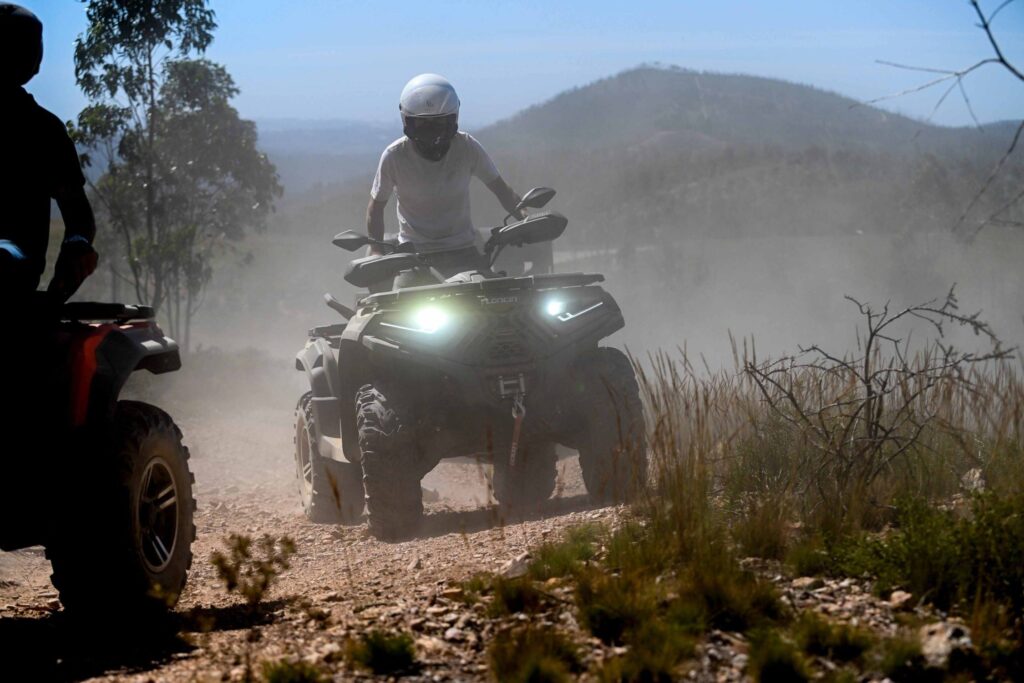
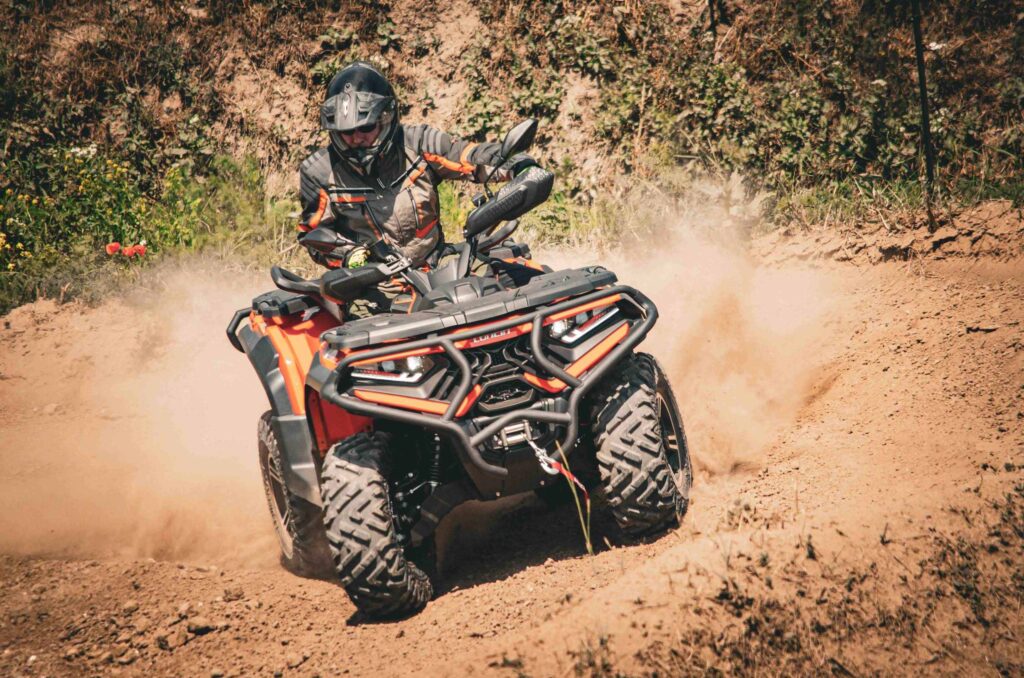
Mud Riding: Off-road activities designed for muddy environments.
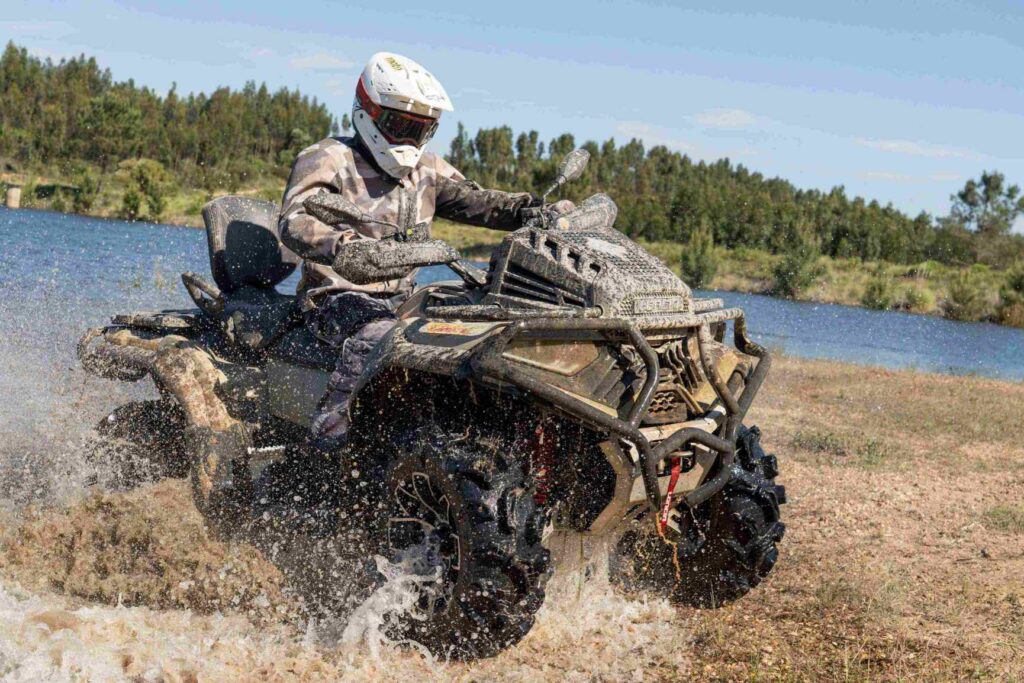
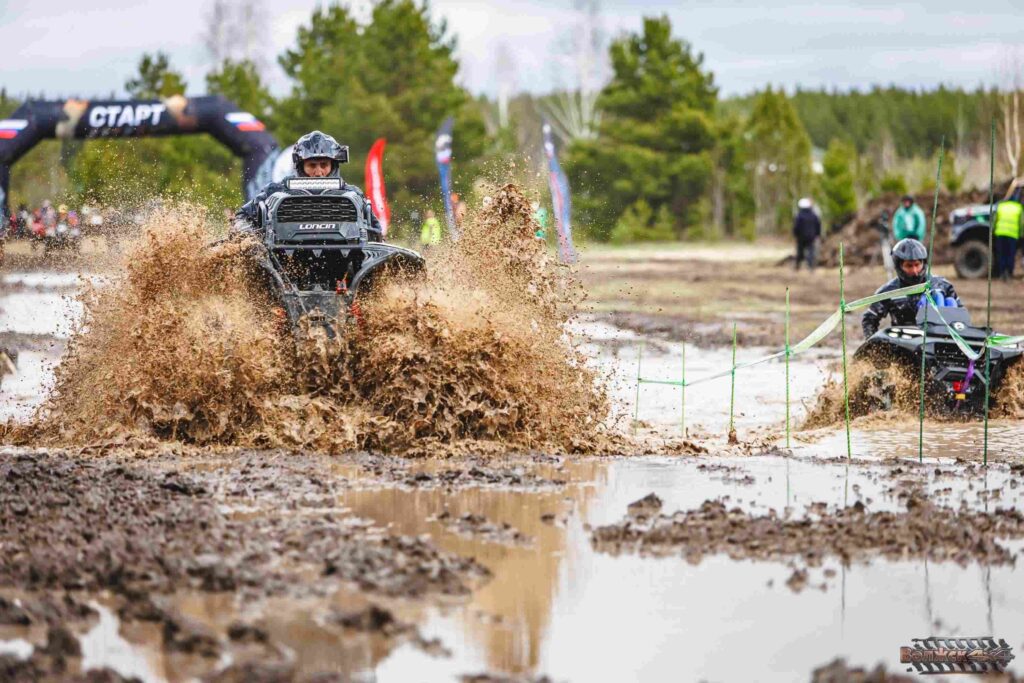
Therefore, although all are ATV, Utility ATV, Recreational ATV, and Mud ATV can have completely different design focuses.
How to Choose the Right ATV?
When choosing an ATV, the first step should be to determine the intended use case, rather than simply pursuing the largest engine.
Consider:
- Purpose: Work, agriculture, recreation, or professional off-roading
- Engine Displacement: Choose based on power requirements
- Drive System: 2WD, 4WD, or configuration with differential locks
- Ground Clearance: Determines traversing complex terrain
- Load Capacity: Whether transporting equipment is required
- Towing Capacity: Whether towing a trailer is required
- Suspension System: Affects comfort and off-road stability
- Tire Configuration: Suitable for the target terrain
LONCIN suggests that the core of choosing an ATV is not finding the so-called “most powerful” model, but rather finding an ATV that matches the actual usage environment.
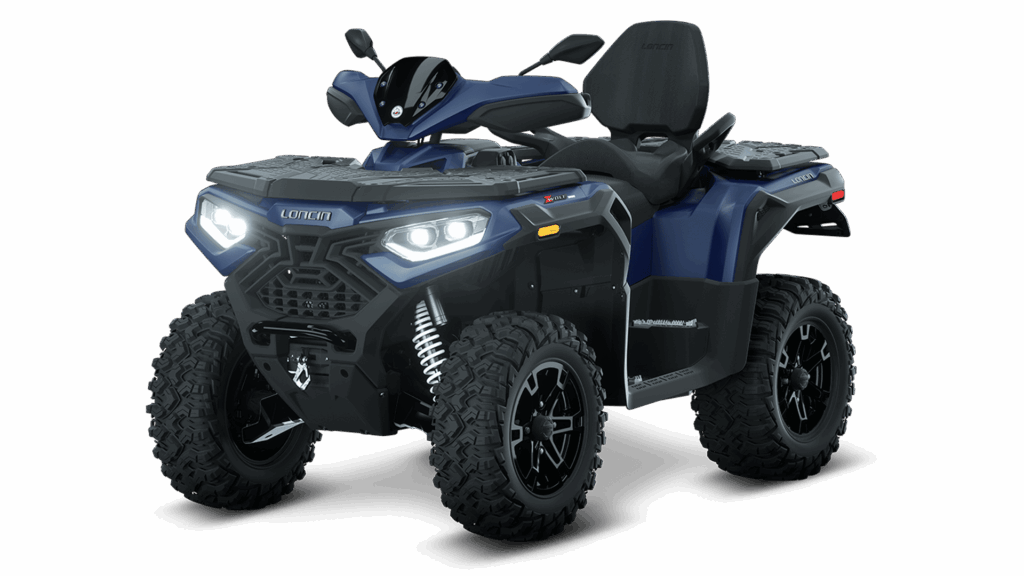
.webp "XWolf700L 19")
.webp "XWolf550L 20")
.webp "XWolf300 21")
.jpg "XWolf200 22")
-1.webp "UWolf1000 23")
.webp "UWolf700L 24")