










How ATV Suspension Systems Enhance ATV Off Road Capability
All-terrain vehicles (ATVs) need to operate through various obstacles which include rocks and mud and tree roots and uneven terrain. Buyers typically concentrate on engine power attributes however actual off-road capabilities rely more on suspension systems. A suspension system which has been properly engineered provides two main functions because it absorbs ground impacts while maintaining tire contact with the surface for better traction and control.
Key Role of the ATV Suspension System
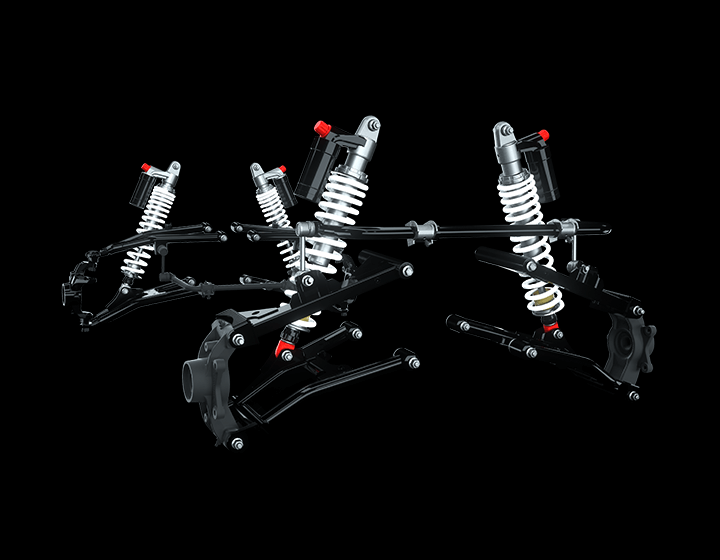
Our suspension system mechanically controls wheel movement while providing protection against terrain impacts. When a wheel hits a rock or pothole, the springs and shock absorbers absorb the impact, reducing vibrations transmitted to the frame and rider.
High-performance all-terrain vehicles typically employ a double wishbone independent suspension system, allowing each wheel to move independently. This design maintains vehicle stability even when a single wheel traverses an obstacle. For example, the LONCIN XWOLF1000 uses double wishbone suspension both front and rear, reducing pitch and body roll on rough terrain and enhancing stability.
How Long Suspension Travel Boosts Off Road Capability
The vertical distance a wheel travels when it hits an obstacle determines the suspension travel, a crucial measurement. Insufficient travel causes the wheel to lift off the ground, reducing traction. Longer travel, on the other hand, keeps the tire in contact with the ground, improving grip and stability.
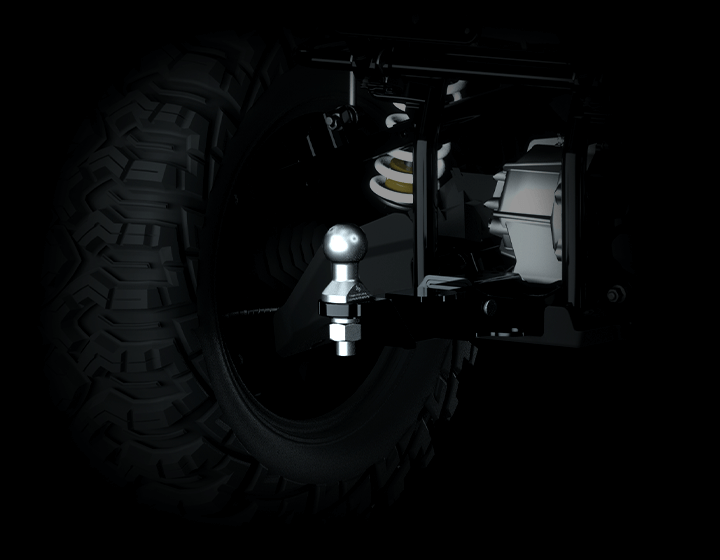
The LONCIN XWOLF1000 offers:
- Front travel: 235 mm
- Rear travel: 255 mm
This long-travel design ensures stable traction across challenging terrain, allowing engine power to be effectively transferred to the ground.
Shock Absorbers and Vehicle Stability
Shock absorbers work as essential components that help to reduce the impact of multiple contacts which occur on trails that have rocky terrain and root systems and uneven surfaces. The system experiences control loss because insufficient damping allows vibrations to travel through the frame and the rider.
The XWOLF1000 uses air shock absorbers that allow complete adjustments to handle all types of impacts which occur during high-speed off-roading and mud trails and mountain climbing. The system uses adjustable damping to control bounce while preserving stability which decreases the chances of losing control.
Suspension and Ground Clearance Coordination
A robust suspension system needs to work in conjunction with the vehicle’s suspension system, which controls the vehicle’s ability to handle obstacles of varying heights. The XWOLF1000 has a ground clearance of 305 mm, which allows its long-travel suspension system to prevent chassis damage when driving over rocks and deep ditches.
Additionally, it features:
- 27-inch off-road tires
- 14-inch aluminum alloy wheels
The larger tires enhance off-road capability on mud, gravel, and rugged surfaces.
Powertrain Synergy with Suspension
The suspension system keeps tires on the road while drivers need stable power delivery to achieve proper traction. The XWOLF1000 is powered by a 976 cc V-twin liquid-cooled engine with 102 N·m of torque at 5500 rpm, paired with Bosch EFI fuel injection. The system maintains constant torque while the suspension system keeps tires on the ground, which enables the vehicle to maintain traction in muddy conditions and on steep slopes.
Conclusion
The off-road performance of an all-terrain vehicle (ATV) depends not only on engine power, but also on the perfect combination of suspension structure, suspension travel, shock absorbers, ground clearance, and tire design. When these components work together, the ATV maintains traction, stability, and handling even in the most demanding off-road conditions.
.webp "XWolf700L 10")
.webp "XWolf550L 11")
.webp "XWolf300 12")
.jpg "XWolf200 13")
-1.webp "UWolf1000 14")
.webp "UWolf700L 15")