











ATV Won’t Start? Understanding Spark, Fuel, and EFI Diagnostics on LONCIN ATV
If your LONCIN ATV suddenly fails to start and has no spark, it will undoubtedly affect your work and life, as well as your travel plans. The good news is that most starting problems usually originate from a few critical systems, and many issues can be initially diagnosed without specialized repair equipment.
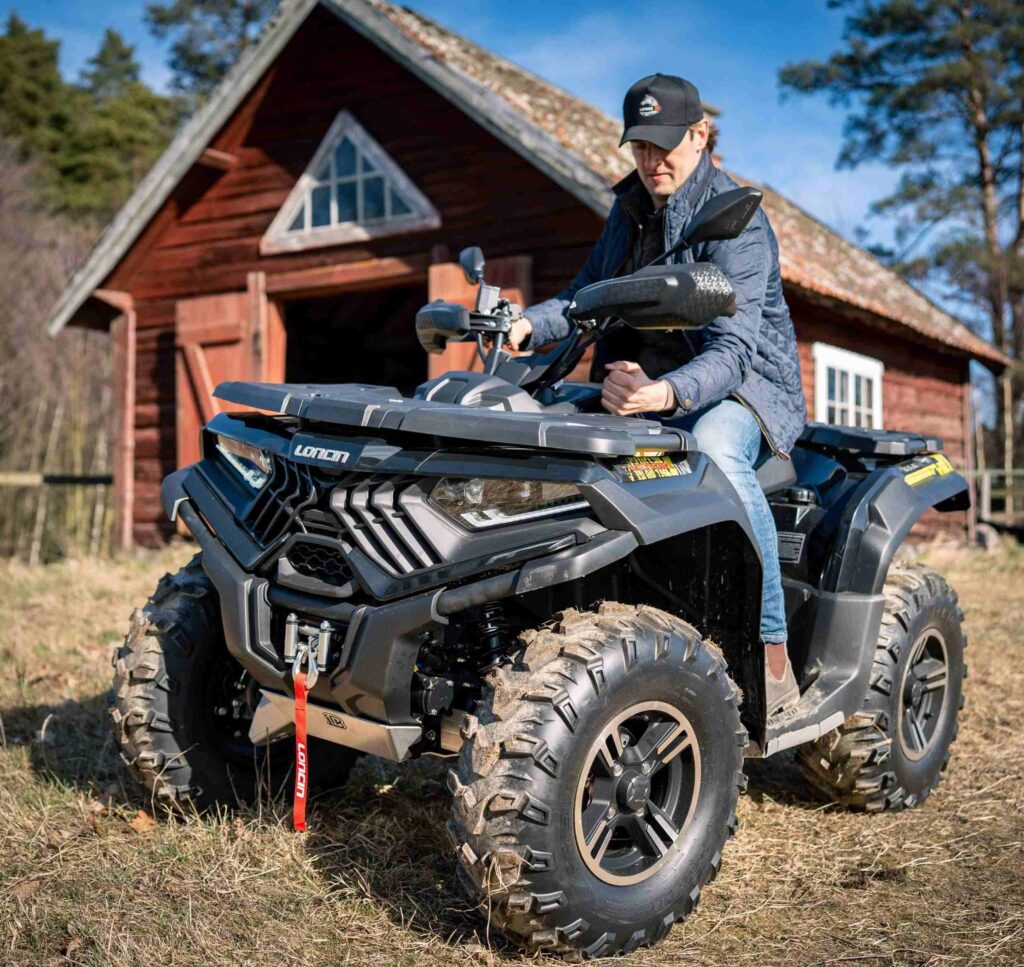
This article will introduce diagnostic methods for common ignition failures, fuel supply problems, and EFI system-related issues in LONCIN ATV, helping users quickly identify possible causes.
The Three Essentials Every ATV Engine Needs
Before troubleshooting, it helps to understand one basic principle:
Every ATV engine requires three things to run:
- Fuel
- Spark
- Compression
If any one of these is missing, the engine will not start.
For modern EFI ATVs, spark and fuel delivery are usually the first systems to inspect.
Step 1: Check Whether the Engine Cranks Normally
Start with the simplest observation.
If the Engine Does Not Crank
Possible causes include:
Weak or discharged battery
Loose battery terminals
Blown fuse
Faulty starter relay
Check battery connections and verify battery voltage before moving to more complex diagnostics.
If the Engine Cranks but Will Not Start
The battery and starter system are likely functioning correctly.
Move on to spark and fuel system inspection.
Step 2: Diagnose Common ATV Spark Problems
A failed ignition system is one of the most common reasons an ATV won’t start.
Inspect the Spark Plug
Remove the spark plug and check for:
- Excessive carbon deposits
- Oil contamination
- Damaged electrodes
- Incorrect spark plug gap
A worn spark plug can prevent proper ignition even when fuel is reaching the engine.
Check the Ignition Coil and Wiring
Inspect ignition coil connections for:
- Loose connectors
- Corrosion
- Damaged wires
Off-road environments expose electrical components to mud, moisture, vibration, and dust, which can affect ignition performance over time.
Verify the Engine Stop Switch
An activated or damaged kill switch can interrupt spark delivery and create a no-start condition.
Step 3: Check Fuel Delivery on an EFI ATV
If spark is present, the next step is verifying fuel delivery.
Listen for the Fuel Pump
When the ignition is switched on, the fuel pump should briefly prime the system.
No sound may indicate:
- Fuel pump failure
- Electrical connection issues
- Blown fuse
Inspect Fuel Quality
Old fuel can cause starting problems, especially after long storage periods.
Replace stale fuel if the ATV has not been used for several months.
Check Fuel Lines
Look for:
- Leaks
- Kinks
- Blockages
Even minor restrictions can affect fuel pressure and EFI performance.
Step 4: Check EFI System Sensors
LONCIN ATVs control fuel injection and ignition through the ECU in conjunction with multiple sensors.
Although different LONCIN ATV models and configurations may use different sensor setups, all EFI systems rely on the ECU to process signals from multiple sensors. Abnormal signals related to temperature, intake air, or vehicle posture may affect normal engine starting.
Crankshaft Position Sensor
This sensor supplies the ECU with information about engine speed and crankshaft position.
Should there be any malfunction with the crankshaft position sensor signals, the ECU would not be able to properly manage the ignition and fuel injection process, which would consequently lead to problems like inability to start, no spark, or engine stalling.
Throttle Position Sensor
The throttle position sensor (TPS) is responsible for measuring the opening of the throttle and sending it to the ECU where calculations regarding the amount of fuel injections are made.
A malfunctioning TPS will not be able to stop the engine from starting, but it may influence the way the ECU calculates throttle opening, resulting in abnormal fuel injections and:
- Difficulty starting when cold
- Unstable idle
- Poor acceleration
- Engine stalls easily after starting
- Fault indicator light illuminates or the system enters protection mode
During troubleshooting, check whether the TPS sensor and its connectors have issues such as dirt accumulation, moisture ingress, or terminal corrosion.
Step 5: Use This Quick EFI Diagnostic Checklist
Before contacting a service technician, check the following:
- Battery voltage
- Fuel level
- Fuel pump operation
- Spark plug condition
- Ignition coil connections
- Engine stop switch
- Sensor connectors
- Dashboard warning indicators
Systematic inspection often identifies the problem faster than replacing parts at random.
Preventing Future EFI Starting Problems
Many EFI-related issues can be avoided through routine maintenance.
Recommended practices include:
- Keeping battery terminals clean
- Replacing spark plugs at recommended intervals
- Inspecting wiring harnesses regularly
- Using fresh fuel
- Cleaning electrical connectors after heavy mud or water exposure
These simple steps can improve reliability and reduce unexpected downtime.

.webp "XWolf700L 9")
.webp "XWolf550L 10")
.webp "XWolf300 11")
.jpg "XWolf200 12")
-1.webp "UWolf1000 13")
.webp "UWolf700L 14")